
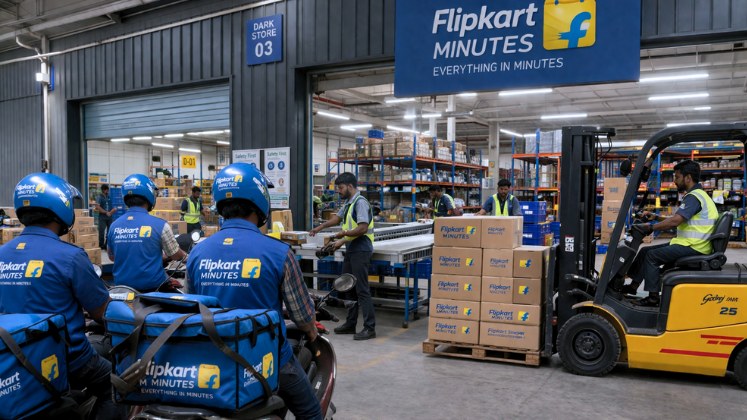
The fast-business market in India is flourishing, and demand for some platforms has even more than doubled. However, the intensive promotion of rapid distribution services in Flipkart and the Amazon is exacerbating this already crowded market environment, and industry earnings pressures remain. Flipkart is one of India ‘ s largest electric companies, entering the fast business field slightly later than local competitors like Blinkit, Swighy and Zepto. According to TechCrunch, the number of its warehouses (online shopping distribution centres) had exceeded 800 by the current week. SBG indicated that it plans to double this figure by the end of 2026.

Flipkart, under the Wal-Mart flag, was involved in fast business for the first time in August 2024, through Flipkart Minutes, providing multi-species distribution services within a maximum of 10 minutes. Since then, the sector has expanded rapidly. Bernstein reported that over 6,000 clandestine warehouses were now operational, leading to significant overlaps and increased competition among major urban enterprises. According to Bernstein data, Flipkart’s distribution network in India is still smaller than that of market leader Blinkit (with over 2,200 clandestine warehouses). However, Flipkart is engaged in expanding beyond major cities to boost growth. Unlike Blinkit, the latter plans to expand the size of the barns to 3,000 by 2027, while focusing on the top 10 major cities. The founder of the consumer insinuation company, Datum Intelligence, Satish Mina, stated: “Flipkart owns the genes of Wal-Mart, i.e., expands the potential user group by increasing its market share, thus taking over the dominant position of the market.” According to informed sources, Flipkart has gained market pull outside major cities, with 25-30 per cent of its fast-business orders now coming from small towns, and single-shop orders have also achieved about 25 per cent ring growth.
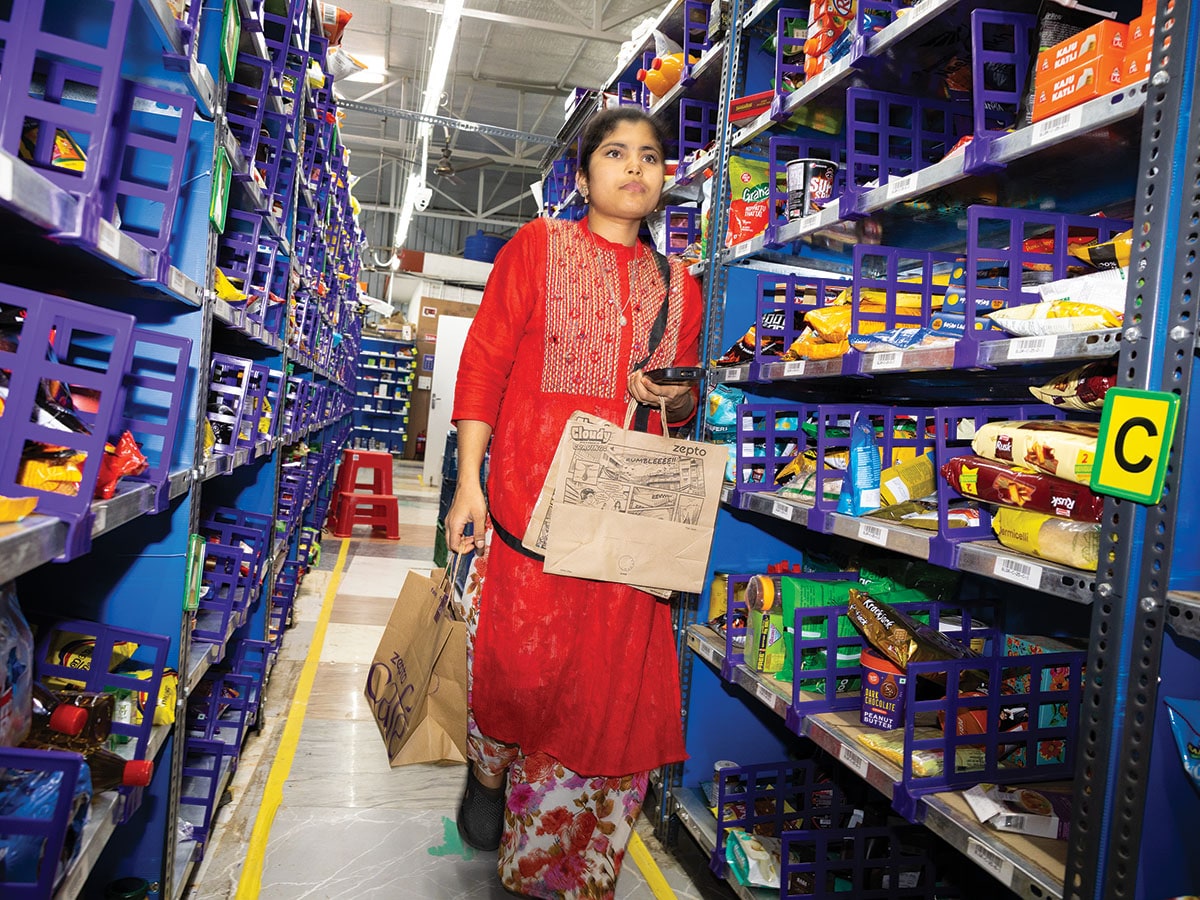
However, the growth of fast business is still concentrated in larger cities. Bernstein indicated that, even though expansion to small towns was accelerating, much of the demand continued to be driven by large cities, with faster distribution and better use of the bunkers as a result of higher population density. This dynamic also underpins profitability, and Bernstein data show that India ‘ s top eight major cities have over 3,800 clandestine warehouses run by five major enterprises, of which about 3,600 have a profit potential. “It is clear that large cities have higher rates of return and greater profitability because of higher levels of throughput.” According to the Executive Vice-President of Investment Banks and Brokers, Elara Capital, Kalan Toolani, “the core of this business is higher throughput, which, at present, is mainly in large city markets.” Nevertheless, some analysts have seen long-term opportunities outside major cities. “If companies move beyond the groceries and provide a wider range of commodities at a faster pace, growth may occur in non-urban areas, and that is precisely what Flipkart is betting on,” said Satish Mina of Datum, a market research and business consultancy. However, it takes time to expand beyond major cities. According to Adia Soman, the senior analyser of Lyon securities, fast-business is currently viable in about 125 cities, and it usually takes 6 to 12 months to mature and to make a profit, and many new shops located in small towns are still in the climb.
The Amazon entered the Indian Express Business Market at the end of 2024 and is now in the process of being scaled up. According to the Bank, approximately 450 to 500 clandestine warehouses have been launched so far in the Amazon, of which some 330 to 370 are operating to meet the growing demand for faster distribution by consumers. Flipkart not only relies on the expansion of the barn to compete, but also to use aggressive pricing strategies. According to a sample analysis carried out by Jeffrey last month, Flipkart provided the highest discounts among the same products in the industry, ranging from 23 to 24 per cent for each category, with a view to attracting users on a price and convenience basis. These competition strategies seem to be working. The financial services company JM Financial recently warned that Swigy’s electricity company seemed to be caught up in “the dilemma between growth and profit”. Eternal stock prices under the flag of Blinkit have fallen by about 15 per cent so far this year, while Swigi has fallen by more than 29 per cent. The entry and expansion of large enterprises, such as Flipkart and Amazon, is reshaping the pattern of competition. The senior partner of Technopak Advisors, a retail consulting firm, Ankur Bisen, stated: “Fast Business is no longer the initial stage and has become a game between large enterprises”. He added that the economic situation of the industry and its limited differentiation might eventually facilitate the integration of the industry, since in the market where discounts prevailed, companies were trying to grab the same customers.